
Forest Stream Awakening
A clear woodland stream with birds waking up around it and a woodpecker deeper in the trees.
- Forest Birds & River 50%
- River 30%
- Woodpecker and Birds 14%

Nature sounds are recordings of water, weather, birds and wind, and what the research credits them with is modest. People rate a room as more pleasant with one playing, and they report less stress and annoyance. Almost all of that was measured in people who were awake. No study shows a river recording improves your health. The everyday uses are the useful ones: water over a neighbor’s television, birdsong in an office with no window, rain to quiet a bedroom. The river player costs nothing and needs no sign-up, so you can hold a recording up against your own room in a minute.
Leave something playing while you read the rest.
Three pieces of work sit behind most of what gets written about this, and each one is narrower than the headlines around it.
A 2021 systematic review pooled 36 studies of natural sound and health-related outcomes. Water recordings came out ahead for mood and health measures, bird recordings for stress and annoyance, and the average effects were small. Nearly all of it was measured in people who were awake, in a lab or out on a park trail.
A 2010 experiment gave 40 adults a stressful arithmetic task, then played either nature sound or road traffic. With nature sound, the body’s stress response settled faster, tracked as the sweat response on the skin. That covered a few minutes after one task, not an afternoon of listening.
A 2021 review of steady sound as a sleep aid came out split: some sleepers did better with sound, others worse. The reviewers graded that evidence at the lowest level on their scale and advised against recommending continuous sound to improve sleep.
None of this makes a recording a stand-in for being outdoors. A speaker hands you the sound and none of the rest of a park: the daylight, the walking, the cool air, an hour away from your desk. Research on time spent in nature measures all of those at once, so borrowing its numbers for a track on your phone claims more than the track can do.
Pick by the job in front of you, because these recordings behave nothing alike. Water runs continuously and hides other noise. A bird call is an event, and an event pulls your attention to it.
| Nature sound | Use it for | Keep in mind |
|---|---|---|
| River or waterfall | A television through the wall, voices in the next room | Water blurs speech, it never deletes it |
| Spring birds | A dark morning, an office with no window | Sharp calls interrupt reading and wake light sleepers |
| Heavy rain or gentle rain | Bedtime, and rooms where the noise keeps changing | Heavy rain needs a real speaker; a phone thins it out |
| Mellow wind or autumn leaves | Reading and slow desk work | Gusts that jump above the rest break concentration |
| Ocean waves | Lying down, if the coast means something to you | The room comes back in the gap between waves |
A river runs without stopping, with no words and no melody in it, so it fills the gaps a television or a conversation next door keeps poking through. Voices are the hard case for any sound you put against them, because your brain keeps hunting for speech, so expect the words to go blurry instead of disappearing. A waterfall is the louder of the two and covers more; a river stays gentler and lets a little back in.
Birdsong is the one nature sound that belongs to a time of day: most of us hear it as morning. That makes them good at a desk before sunrise, and good in an office where nothing outside the room changes all day. It also makes them wrong for anything that needs long stretches of reading, and wrong at night: a call that arrives out of nowhere is exactly the kind of change that lifts a light sleeper toward waking.
A soft wind and a bed of dry leaves hold a steady wash with small detail over it, which is about as much as a page of text will put up with. Listen for gusts before you settle in. A recording that surges every twenty seconds will pull your eyes off the line each time it does. The best sounds for reading guide goes further into that.
Rain is where most people end up for sleep, and heavy rain is the most played rain on Slo; rain sounds for sleeping covers what it does and doesn’t cover. Waves come with a catch of their own, the quiet stretch between one and the next, and ocean sounds for sleep works through it.
Nature presets
Forest Stream Awakening combines flowing water with woodland detail. Rain on a Roof is steadier and may be easier to ignore during reading or wind-down time.
A clear woodland stream with birds waking up around it and a woodpecker deeper in the trees.
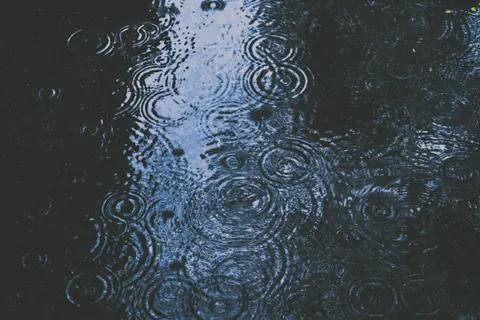
Two kinds of rain at once, close drops and a wider shower, with a quiet hush holding them together.
Set the volume by the noise you’re covering, not by how the recording sounds on its own. Raise it until the television or the hallway stops standing out, then stop. A conversation in the room should still be easy at that setting. Push past it and the recording becomes the thing you notice.
Distance does more than the dial. Put a small speaker on the far side of the room and point it at the wall the noise arrives through; that beats a phone next to your head. And a phone under a pillow at high volume is the one arrangement worth avoiding outright. Keep your alarm audible over whatever you pick.
None of this works by making you relax. What a recording changes is the room, and a room with a stream in it is easier to sit in than a room with a compressor cycling outside the window. So choose something steady with no sudden calls in it, bring it up to the level that softens the noise, and then leave the volume where it is for ten minutes. If you keep noticing the recording itself, it’s the wrong one for you; a plainer recording or plain silence will do better.
Stress that never lets up is worth a doctor’s time. Slo is a sound player, not a medical device, and people use it much as they’d use a fan: to make an hour easier to sit through.
At night the reason to play anything is masking. A steady background makes a car door or a pipe in the wall less distinct, so fewer things stand out enough to wake you. The bigger claim is the one the evidence won’t carry: nothing shows an ordinary recording gives you deeper sleep.
Two things to leave off after lights out. One is any recording with sudden events in it, which rules out bird calls and rules out thunder, because a crack that lands well above everything around it is what wakes people. If you want weather at bedtime, pick a rain recording where the thunder stays far off and never jumps above the rain. The other is a phone on the mattress with the volume up. Put the sound well away from the pillow, keep it quiet, and if your bedroom is already silent, spend a few nights with nothing before you decide the recording is earning its place.
For the whole setup, read how sound affects sleep quality and how to build a sleep soundscape.
Nature sound helps a working hour when it replaces something worse: a colleague on a call, or a road that keeps going quiet and loud again. It hurts when the recording holds events you want to follow. For reading and writing, stay on water, rain or a steady wind, and save birds and surf for work your eyes do more of than your ears.
No research says natural audio raises anyone’s concentration on its own. The comparison that settles it is yours: the same kind of task with the sound, then the same task without it. Our guides to the best sounds for focus and best sounds for studying match sound types to particular work.
Studies of nature sounds mostly measured mood and stress in people who were awake, and the gains were modest: a room rated as more pleasant, less stress and annoyance, with water recordings doing best. They don’t show health improvements, and a recording isn’t the same as being outdoors. The benefit you can count on is a room that bothers you less.
Flowing water is the sensible first try, because water recordings came out best for mood in the 2021 review and a river has no words and no tune to follow. Your own associations count for at least as much, so compare a river with rain, and compare both with silence, on the same kind of evening.
They help when noise is the problem, because a steady stream or steady rain makes a car door or a pipe less distinct. The review of steady sound and sleep came out split, and the evidence was graded at the lowest level, so don’t expect deeper sleep. Keep the volume down and skip anything with sudden bird calls or thunder in it.
In studies people reported less stress and annoyance with natural sound playing, and in one experiment the body’s stress response settled faster after a hard task with nature sound than with traffic noise. The effects were small and measured over minutes. Stress that never lets up is worth a doctor’s time rather than a longer playlist.
No, and nobody has put a number on how close a recording gets. It gives you the sound and leaves out the daylight, the walking, the air and the hour away from your desk, all of which research on time in nature measures together. Treat it as one piece of a park brought indoors.
Sometimes, mainly when they replace speech or a noise that keeps changing. Pick something continuous with no animal calls in it, then run the same kind of task with it and without it before you commit. A recording you keep listening to is a poor focus sound for you, however nice it is.
Recordings of the natural world: rain, a river, waves, wind through trees, birds, thunder, crickets. They aren’t noise colors like white or brown noise, which come out of a generator and hold one even texture. Nature recordings move around, because weather and animals do.
To stack a stream under rain and keep the mix, the Slo app has an unlimited mixer and sleep timers on supported platforms.
Explore more sounds in Slo
Stack two or three sounds, keep the blend, and let the timer stop it. Slo, on iOS, Android and Mac.