
White Noise and Ocean for Noisy Apartments
An even hiss with slow waves over it, for an apartment where the noise never settles.
- White Noise 66%
- Ocean Waves 35%
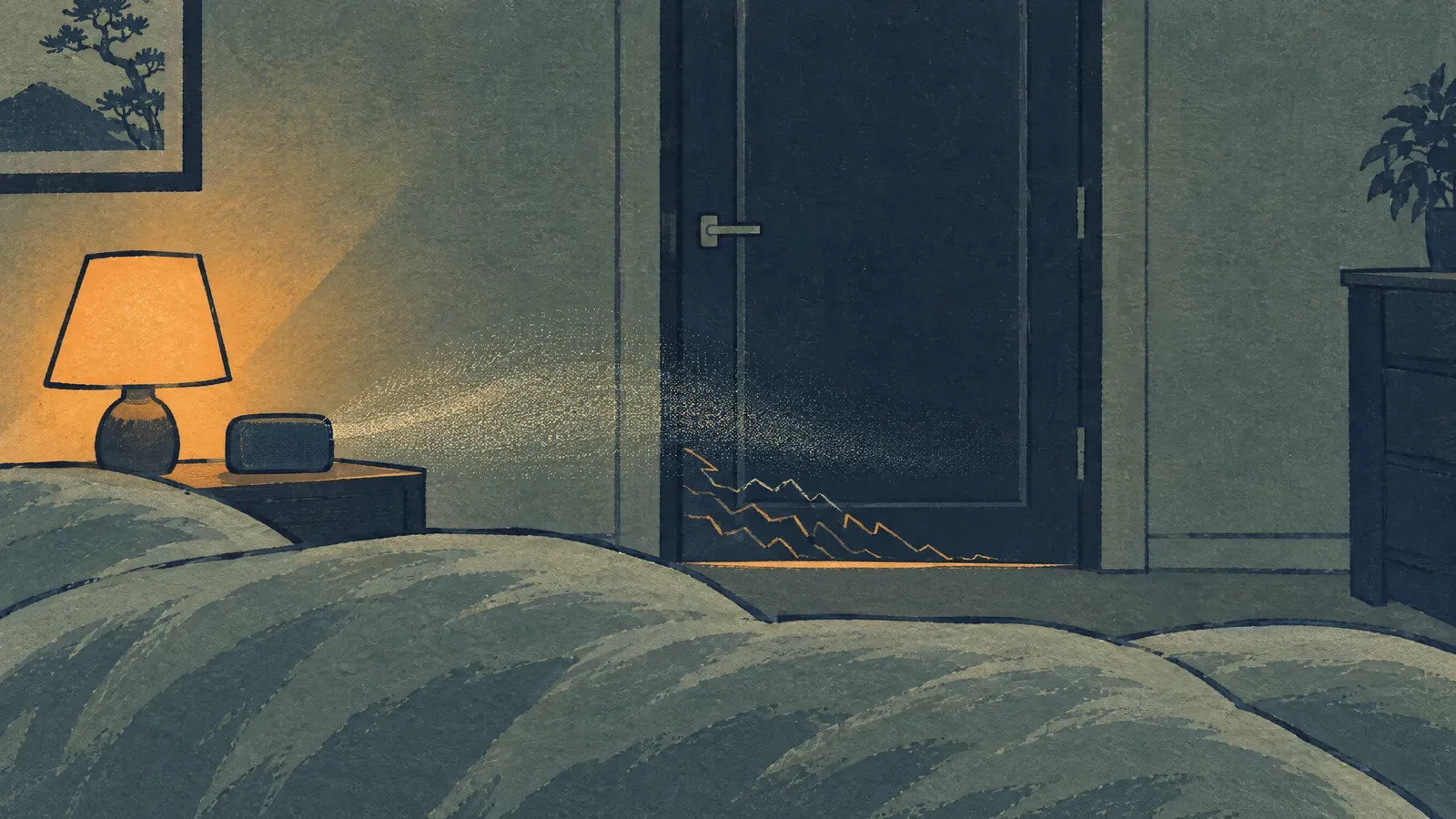
White noise helps when noise is what wakes you. It’s a bright, even hiss, and a steady hiss makes a sudden sound stand out less, so a door down the hall or a voice through the wall arrives with less of an edge on it. The white noise player costs nothing, needs no account and runs in a browser tab, so tonight is soon enough to test it. It won’t make you sleepy, and a deep rumble like traffic passes right through it. Start it quieter than you think you need, because a hiss sounds louder than a rumble at the same setting.
Press play and read on.
It helps when noise is the problem, and nobody has shown more than that. A 2021 review gathered up the studies on steady sound and sleep and found them pulling in both directions: some sleepers slept better, and for others the sound was the thing keeping them awake. The reviewers put that evidence in their lowest quality band and warned that a steady sound shouldn’t be sold as a sleep aid.
So the claim worth making is a modest one. White noise can make your bedroom less eventful, and plenty of people would rather have a hiss in the room than lie there waiting for the next bang. No study shows a hiss making you fall asleep faster or sleep better in itself. It costs nothing to run it for a week and find out.
Your ears don’t switch off at night. They keep working, and what pulls you out of sleep is usually a sound that jumps out of a quiet room: the latch on a door, a car, someone saying a sentence in the hallway. It’s the jump that does it more than the loudness.
White noise keeps a little sound in the room all night, so a sudden sound has less silence to stand out against. The door still happens, and it reaches you with less of an edge on it. That’s the whole mechanism. It’s also why white noise does nothing for a bad night with no sound behind it, and why turning it up past the point where it works just means sleeping in more noise.
Whatever you play, you’re adding sound and not taking the source away. Shutting the window, or a set of earplugs, may fix what a hiss only covers up.
Voices are why most people end up here, and they’re the hardest thing for any sound to deal with. Your ear goes on looking for words inside noise and it doesn’t give up. White noise blurs a conversation through the wall until you stop following it, and the words never fully go away. It still does more for speech than a deep rumble does, which is the main reason to pick it.
Sharp household sounds are where it’s strongest. A partner’s alarm, a faucet running somewhere in the building, keys in a hallway door, a dog two houses down: all of that stops standing out.
Deep rumble is a different job. A bus pulling away from the lights, a boiler that kicks in at two, bass from the apartment below. White noise has almost nothing that deep in it, so the rumble passes straight through, and volume won’t change that. Brown noise is the sound for that room, and switching to it does more than any amount of volume.
Comparing them by ear beats reading about them. Give each one a few seconds, and don’t touch the volume between them.
White noise is the brightest of the three, like a faucet left running. Brown noise is a deep rumble, closer to a plane heard from inside the cabin. Pink noise sits between them, with some hiss and some rumble and nothing in it that jumps out.
| What keeps waking you | Sound to try first |
|---|---|
| Voices, a TV through a wall, a door, a faucet | White noise |
| The same sounds, but the hiss wears on you by midnight | Pink noise |
| Traffic, a boiler, bass or footsteps from below | Brown noise |
| Nothing in particular, and the room feels too quiet | Pink noise or rain |
Whichever one you stop noticing after a minute is your answer. The brown, white and pink noise guide goes further into how the three textures differ.
Close, but not the same. A fan has some of the hiss of white noise with a deep motor rumble under it, which puts it nearer brown noise than white. That deeper part is why a fan does more for traffic than white noise does, and why white noise blurs voices better than a fan does.
If you sleep with a real fan for the sound and not the air, a recording gives you the same thing without the cold room. The fan sounds guide is the full answer, including which of the three fan recordings to pick.
Silence wins when your bedroom is genuinely quiet. Added hiss in a quiet room is one more thing to listen to, and some people notice it all night instead of the street they wanted to cover.
White noise wins when something keeps breaking the quiet. A shared wall, a hallway, a road that goes busy again at five: those rooms are never silent for long, and the silence between the sounds is what makes each one land. Try a few nights each way before you decide, and change one thing at a time.
Start quieter than feels right. Raise it until the sound you’re bothered by stops standing out, then leave it alone. You should be able to talk in the room without raising your voice, and your alarm and smoke detector should still get through. Play your alarm over the top once to check.
Set the level with the room at its normal night volume, not in silence, or you’ll pick something too quiet to do anything. A volume percentage on a phone can’t tell you decibels either, since the recording, the speaker and the distance all change what reaches you. The World Health Organization’s safe-listening advice is about hours of loud sound through earbuds, and a quiet hiss across a bedroom is nowhere near that.
Where the speaker stands matters more than how far up the dial goes. Put it on the floor on the far side of the room, aimed at the wall the noise arrives through, and you get cover without pressing sound into your pillow. Headphones are usually uncomfortable to sleep in and put the sound closest to your ears, which is the one place you don’t want it.
Nightly use has no known harm for an adult, as long as the volume stays low enough to talk over. Hearing damage comes from hours of loud sound right next to your ear, and a quiet hiss a few steps away is nowhere near that, so get the phone off the pillow and there’s little left to worry about.
The honest cost is different. A hiss tires some people out across a full night in a way a rumble doesn’t, and if you wake up worn out on a night the room was quiet anyway, that’s worth taking as a signal. Drop it a little first, and if it still wears on you, switch to pink noise, which is the softer version of the same idea.
Habit is the other cost. Sleep with a hiss every night and a silent hotel room starts to feel strange for a night or two. Leaving it off one night a week tells you how much you’ve come to rely on it, and a timer keeps the sound out of most of the night anyway.
This is the one place to be careful with volume. The 2014 study of 14 infant sleep machines found every one louder at 30 cm, about the distance of a crib rail, than hospital nurseries allow, and its authors asked parents for distance, a low level and limited use. White noise for babies carries those measurements and how to set a nursery up.
So put the player across the room, run it at the lowest level that covers the hallway or the street, and keep an adult in charge of it. A sleep sound doesn’t replace safe-sleep advice, and your pediatrician is the person to ask about your own child’s room.
White noise does nothing about a bad night that has no noise causing it. Coffee at four in the afternoon, a work schedule that shifts every week, a head that won’t stop at three: no recording touches any of those. People do leave it on for that last one, and what they describe is a dull sound to listen to instead of the thought going round. That isn’t treatment for anxiety or insomnia.
Several bad nights a week over months, or days that are falling apart, are worth a clinical assessment rather than another recording. Loud snoring with gasping or long pauses is a medical question, and ringing in one ear, or ringing that’s new or growing, is for an audiologist to look at.
White-noise presets
Ocean movement takes some of the flatness out of a long night, and a quiet fireplace texture suits desk work. Pull the white noise down if either one sounds bright.
An even hiss with slow waves over it, for an apartment where the noise never settles.

Bright, even white noise to blur the talking nearby, with a fire crackling gently over it.
It helps when noise is what wakes you. A steady hiss makes a door down the hall or a voice through the wall stand out less, so fewer things in the room are sharp enough to pull you awake. The evidence on steady sound and sleep is weak and split, so try a week of it and decide for yourself.
Your ears keep working while you sleep, and what pulls you out of it is usually a sound that jumps out of a quiet room. White noise keeps a little sound there all night, so the door or the voice arrives with less of an edge on it. That’s the whole mechanism, and it’s why it does nothing for a bad night with no sound behind it.
Nothing shows that it does. The deep-sleep headlines come from lab studies that played very short pink noise bursts in time with a sleeper’s own brain waves, measured live. A steady hiss from a player doesn’t reproduce that timing, so the finding doesn’t carry over.
Nightly use has no known harm for an adult, as long as the volume stays low enough to talk over. Hearing damage comes from hours of loud sound right next to your ear, so the setup to skip is a phone on your pillow with the volume up. A hiss does tire some people out over a full night; pink noise is the softer version of the same idea.
It depends on what wakes you. White noise is a bright hiss and it blurs voices, doors and a running faucet. Brown noise is a deep rumble and it covers traffic, a boiler or bass from downstairs. Turning white noise up won’t hide a bus, and switching to brown noise will.
Close, but not the same. A fan has some of the hiss of white noise with a deep motor rumble under it, so it sits closer to brown noise. That deeper part is why a fan does more for traffic than white noise does, and why white noise blurs voices better than a fan.
Distance is what decides it. In 2014 researchers measured 14 infant sleep machines and found every one louder at 30 cm, about the distance of a crib rail, than hospital nurseries allow, so stand the player well away from the crib and run it quietly. Ask your pediatrician about your own child’s room.
Skip the setup: white noise for sleeping opens at 45% with an all-night timer, and white noise for baby starts lower with placement notes.
Want more than one track at a time? The Slo app carries a bigger library, saved mixes and sleep timers on the platforms it supports.
Explore more sounds in Slo
Stack two or three sounds, keep the blend, and let the timer stop it. Slo, on iOS, Android and Mac.