Free Online Player
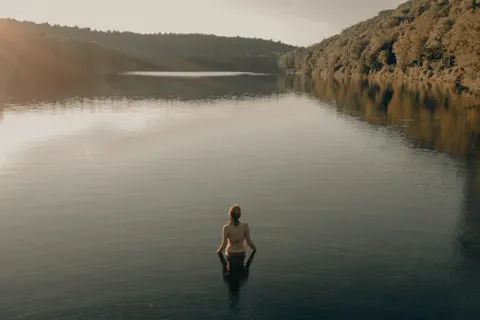
Evening Lake Swimming
Evening Lake Swimming captures water lapping at close range, interrupted by small human-scale splashes in a calm lake. It is quieter and more intimate than surf or a waterfall, with pauses and movement that suggest an unhurried dusk outdoors. For reading, meditation, or winding down, keep this quiet scene low in the room, and set a timer if you only want it for a while.
Ready to play
Put this under rain or a fire, keep the blend you end up with, and play it through the night with your screen off. The Slo app does that on iOS, Android and Mac.


Small movements across still evening water
A calm lake has no ocean swell and no strong current to maintain a continuous roar. Its sound comes from short waves folding at the edge, water moving around a swimmer, and occasional splashes that send ripples outward. The quieter gaps are part of the scene: they reveal scale and make each disturbance feel close without becoming dramatic. In the evening, that open water and the lack of activity can put you in a thoughtful mood, though no recording can promise you will feel calm.
Ocean recordings rise and fall in big cycles, and a river keeps moving past rocks. This lake is gentler than either, with everything happening on a smaller scale. It will not cover noise the way heavy rain does. What it gives you is atmosphere and close water detail, not something steady enough to hide the room.
An intimate water scene for slower moments
Use the lapping as a light companion to journaling, drawing, stretching, or an evening book. Small splashes can act as neutral landmarks without forming a rhythm. During demanding concentration, however, an eventful close recording may attract more attention than uniform noise. Turn it down until the lake becomes part of the room instead of a story you follow.
For sleep, test whether the intermittent movement feels reassuring or alerting. A timer may suit the first part of a bedtime routine, while a steadier river or pink noise can work better through the night. Sound can shape an environment but does not reproduce the physical effects of swimming or treat persistent sleep concerns.
Keep the shoreline spacious
Play the lake quietly through a speaker so the splashes retain distance. Close headphones can exaggerate each water event; if you use them, lower the level and avoid long unattended listening. Make sure alarms, people, and real surroundings remain audible. Fifteen minutes works well for a breathing pause, while a longer timer can accompany an evening reading session.
Open the mixer and place mellow wind far behind the lake for a wider dusk landscape, or compare the gentle movement with water around a sailing boat. The sound-mixing guide explains how to let one detailed recording lead while quieter layers supply depth.
Frequently asked questions
What can I hear in Evening Lake Swimming?
The scene features gentle lake water, close lapping, and occasional small splashes rather than large waves, voices, or a powerful current.
Is lake swimming sound good for sleep?
It may suit listeners who enjoy intimate water detail, especially during wind-down. Light sleepers who notice each splash may prefer a steadier river or rain track.
Will this cover background noise?
Only a little. It has quiet gaps and separate small splashes, so it sets a mood better than it covers anything. Dense rain or a waterfall does that job.
How is a lake different from ocean ambience?
Lake water is smaller in scale, without regular surf cycles. The close lapping and swimmer splashes create a calmer, more personal shoreline scene.