Free Online Player
Thunder
Thunder is the crack, the roll, and the long fading rumble that follows a lightning strike. People play a storm recording for sleep, reading, creative work, or winding down, usually because a distant rumble feels cozy to them and not alarming. Keep it quiet, and set a timer if you only want the storm while you settle.
Ready to play
Put this under rain or a fire, keep the blend you end up with, and play it through the night with your screen off. The Slo app does that on iOS, Android and Mac.


From lightning crack to distant roll
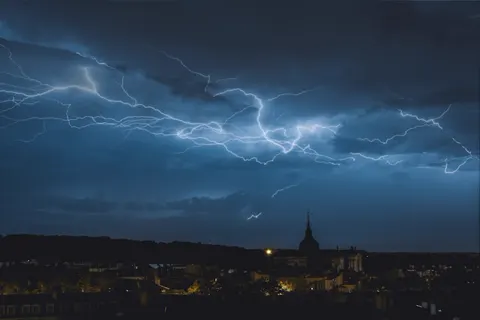
Thunder begins when lightning heats a narrow channel of air extremely rapidly, causing explosive expansion and a pressure wave that reaches us as sound. A nearby strike can create a sharp crack; at greater distance, sound follows multiple paths through uneven air and arrives over time as a long, low roll. A storm recording keeps those changing distances, the rain, and the pauses, so it moves around far more than brown noise does, even though both have a deep rumble in them. For listeners who associate storms with being safely indoors, distant thunder can create a sheltered, dramatic atmosphere suited to reading or winding down. The intermittent rumbles may also blend with traffic or building noise. However, thunder is not inherently calming: sudden peaks can alert light sleepers, people with storm anxiety, pets, or anyone with trauma connected to severe weather. Use it only when the variation feels reassuring, and choose steadier rain or noise when unpredictability keeps you watchful.
The delay between visible lightning and audible thunder occurs because light reaches you almost instantly while sound travels much more slowly. This player is an audio ambience, not a live weather indicator, and it should never replace official warnings. During a real storm, follow local safety guidance even if recorded thunder is part of your normal relaxation routine.
A cinematic backdrop with real peaks
Thunder can give fantasy reading, drawing, or creative writing a strong sense of place without adding words. The long decay leaves stretches of relative calm between events, while each rumble refreshes the scene. For everyday concentration, that same contrast can be too interesting; keep the storm quieter than something steady underneath it if you do not want your attention moving around.
Some sleepers enjoy the feeling of weather outside, particularly when rain fills the gaps. Others wake at every crack. Test the track while awake before leaving it on at bedtime, and avoid using it around someone who has not agreed to the sound. A short timer reduces the chance that a louder event interrupts later sleep stages.
Mix a storm that stays comfortable
Start very low, because a deep rumble travels through walls and can bother a neighbor even when it does not sound loud next to the speaker. Do not add extra bass, keep your alarms audible, and use a room speaker rather than sleep headphones when you can. If pets react to recorded storms, stop playback rather than expecting them to habituate during a rest period.
The online sound mixer lets you put thunder beneath steady rain, with brown noise at an even lower setting to fill quiet gaps. That hierarchy creates distance without forcing every rumble forward. See the sound-mixing guide for advice on choosing one anchor layer, controlling contrast, and removing elements that make a scene more stimulating than useful.
Presets built on thunder
Each one opens with the volumes and the timer already set for a single job, so you can press play and leave it alone.
- Thunderstorm Sounds for Sleeping Heavy rain in front, thunder behind it, timer set to an hour.
Frequently asked questions
Can thunder sounds help you sleep?
They may help people who find distant storms cozy, especially with steady rain underneath. Because thunder has sudden peaks, light sleepers and anyone with storm anxiety may prefer a more uniform sound.
Why does thunder rumble for so long?
Sound from different parts of a lightning channel follows different paths and reflects through the atmosphere and landscape, so it reaches the listener over an extended period.
Will recorded thunder scare pets?
It can. Animals may respond to the audible crack or rumble even without other storm cues. Start quietly, observe their behavior, and stop if they show distress.
What is the best sound to layer with thunder?
Rain is the easiest match, because it fills the quiet between rumbles. Quiet brown noise holds the gaps together too, and both should stay softer than the room around you.