
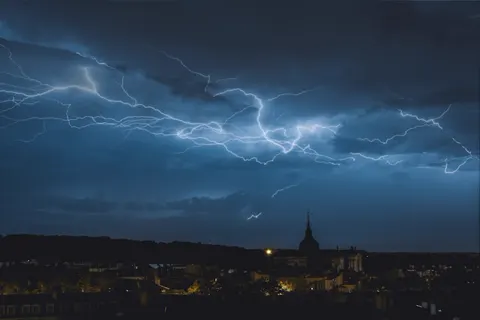


Rain in front, thunder behind
Heavy rain is a busy, bright hiss, and it works on everything above a rumble: a TV through a wall, a door, steps in the hallway. Thunder is a deep rumble, so it covers the other half, the traffic and the boiler. Together they take in more of the room than either does alone, which is why a storm feels enclosing.
The order is what keeps it restful. Rain leads and thunder sits under it, so a roll of thunder arrives as something in the distance. Push the thunder above the rain and it turns into a sound effect you lie there waiting for.
If the thunder keeps waking you up
The other sleep sounds here work by becoming unnoticeable, and a storm never does. Thunder has peaks, a peak is a change, and a change is what pulls a light sleeper toward the surface. That's the trade you make for the weather, and it's better to know it now than at two in the morning.
Turning the thunder down a few steps flattens those peaks and keeps most of the storm. And if you're here because a neighbor keeps waking you, steady rain over brown noise does that job better than a storm does. It's one page away.
Why it stops after an hour
An hour covers the part where a storm helps: winding down, reading, the first stretch of lying still. Past that it starts working against you, because a rumble at four in the morning is the kind of event you don't want in a quiet room.
If you want the storm until morning, All night is in the row under the player and it's your call. Turn the thunder down first so the peaks flatten out, and play your alarm over the top once to be sure you'd wake to it.
Tonight
- Press play. Heavy rain comes up in front, thunder rumbles behind it, and the timer is set to an hour.
- Wait for one roll of thunder before you set the level.
- If that roll made you open your eyes, turn the thunder down a few steps and leave the rain where it is.
- Tap All night if you want the storm until morning, or Off to stop it yourself.
Frequently asked questions
Are thunderstorm sounds good for sleeping?
Good for the weather, mixed as a cover. A roll of thunder is a peak, and a peak is the kind of change that wakes light sleepers. If your real problem is a neighbor or a road, steady rain over brown noise works better. If you simply like falling asleep in a storm, this is a fine thing to lie in.
Can I have thunder without the rain?
Yes. Turn the rain all the way down and the thunder plays on its own. It leaves long quiet gaps between rolls, so it stops covering the room, which is worth knowing if covering the room is why you came.
Can I have rain without the thunder?
Yes. Slide the thunder to zero here, or use the rain page, which pairs rain with brown noise so that you stop noticing it.
How loud should the thunder be?
Under the rain. This page opens with the rain in front, so a roll of thunder reads as distance. Above the rain it turns into a sound effect you keep waiting for, and waiting keeps you awake.
Why does the timer stop after an hour?
Because thunder is an event. Each roll builds and fades, which is easy to drop off to and more likely than steady rain to wake you again at four. An hour covers falling asleep, and All night, 60 min, 30 min and Off are all in the row under the player if you'd rather choose for yourself. For cover that has to last until morning, use the rain page instead.
Will a storm cover a noisy neighbor?
The rain half softens a TV or a conversation through the wall, blurred rather than gone, since your ear keeps hunting for words in whatever you play. The thunder adds depth, and it adds peaks with it. For a neighbor specifically, rain over brown noise is the steadier pick.