My dog is scared of fireworks: what to do tonight
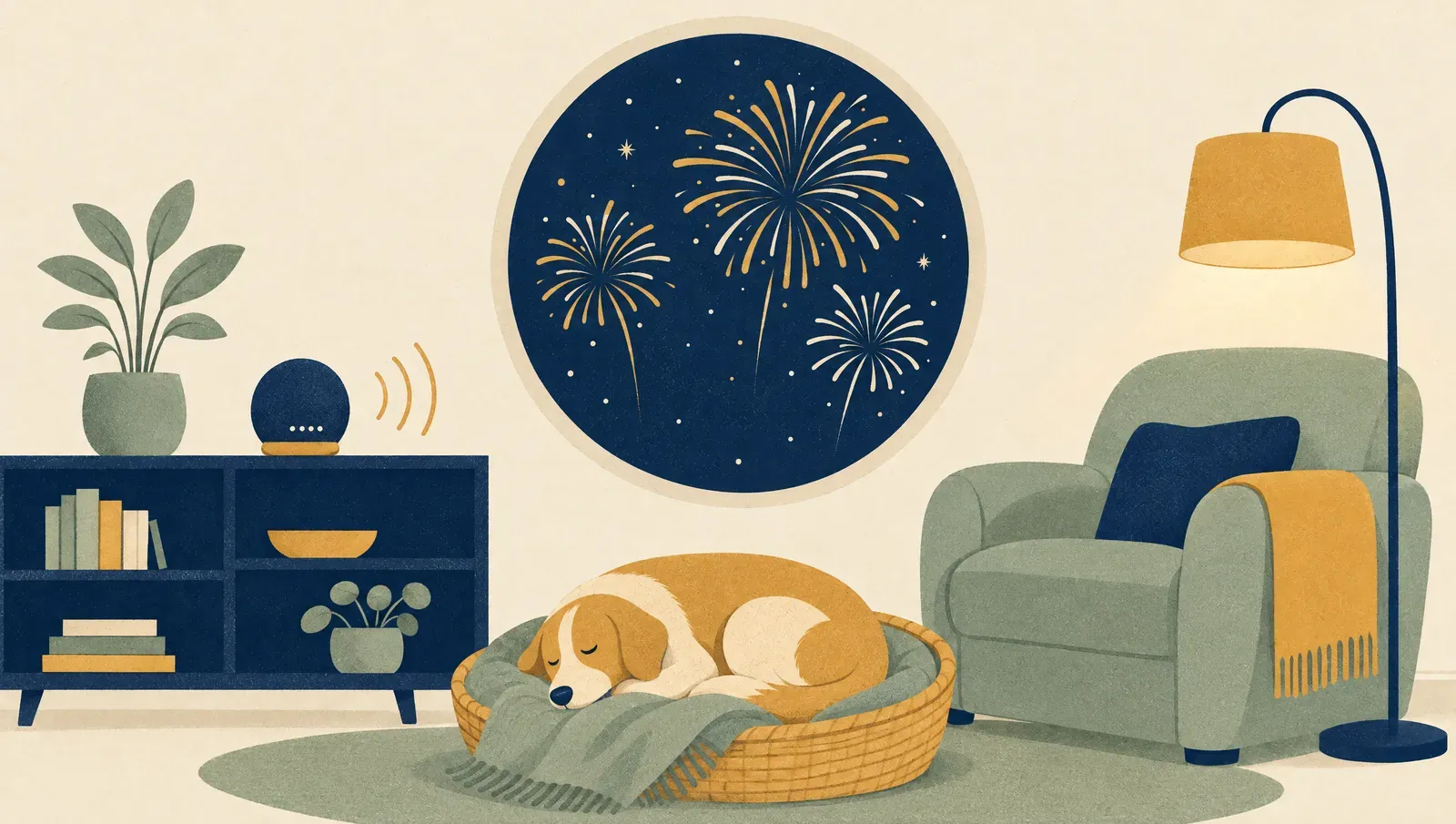
Start a steady background sound hours before the fireworks start, not when the first one goes off, and settle your dog into a spot it already trusts, curtains closed, before the sky lights up. If you don’t have a noise machine, Slo plays brown noise free in your browser, with a timer that runs the whole evening. Everything else works better once that’s in place. No sound will cover a firework going off right outside, but it takes the edge off the rest of the evening.
Before dark
Walk your dog and feed dinner before the fireworks are likely to start, not after. A tired, fed dog settles faster once the noise begins. Then shut the house down: doors, windows, the cat flap, any gate a spooked dog could squeeze through. Check the collar tag and confirm the microchip details are current, because a dog that bolts during fireworks can end up a long way from home before anyone notices it’s gone.
Set up the spot your dog already treats as safe, a covered crate or a corner with its usual bedding, wherever it naps on an ordinary day. Close the curtains or shutters there. That blocks the flashes and takes some of the sound off too. Then start a steady background noise hours before the first bang. Brown noise is the one to reach for, because it carries most of its energy in the low frequencies, the same register a distant firework rumbles in. Set it at a level you could still hold a conversation over.
Press play here, set the timer, and leave it running through the whole display.
While it’s happening
Stay in the room and act normal yourself. Dogs pick up on a tense owner, and calm behavior from you counts for more than anything you say. If your dog comes to you for comfort, let it, holding or petting a frightened dog doesn’t teach it to be more afraid. Offering a chew or a quick game of tug is worth trying too: in one large survey of dog owners, that was one of the few things linked to a calmer dog during fireworks.
If your dog would rather hide, let it. Don’t pull it out of the crate to “face” the noise. That’s not how dogs get less afraid of fireworks, and it just adds a second bad thing to an already bad night. Be honest about the ceiling here, too: nothing playing through a speaker covers a firework going off close by, or the thud that comes up through the floor. That part of the night, you just get through.
When it’s more than fear
Trembling, heavy panting, drooling, frantic hiding, or trying to get through a door or window go beyond ordinary fear. The American Veterinary Society of Animal Behavior treats those as signs of noise phobia. If you’re seeing them, tonight’s plan still applies, but it’s worth calling your vet this week too. A vet can rule out other causes and talk through whether medication has a place; in a large survey of dog owners, about 7 in 10 who’d used vet-prescribed medication for firework fear said it helped.
Before next time
If this happens every year, next year’s version of tonight can be easier. Fear of fireworks can be worked on with your dog, gradually, using recorded firework sounds at low volume, built up over weeks. The same vets’ group that names noise phobia is clear it takes six to eight weeks at minimum, often months to reach calm behavior at full volume. That means starting in the quiet months, not the week of the display. If medication might help, that conversation needs to happen then too, not on the afternoon of.
The same thinking applies if the loud night isn’t the only problem, if it’s the doorbell, being left alone, or the corridor outside the flat that sets your dog off year-round. White noise for dogs covers that everyday case on its own.
Cats get scared too
Cats rarely bark or pace the way dogs do, so a frightened cat is easy to miss. It’s just not in the room. The RSPCA recommends keeping cats indoors after dark with the flap blocked, and making sure whatever spot your cat already prefers, up high or tucked into a box, stays easy to reach and gets left alone once your cat is in it. White noise for cats goes into when sound helps a cat and when it doesn’t.
The nights to plan around
In the US, that’s July 4th, then New Year’s Eve. In the UK, it’s Bonfire Night on November 5th, then New Year’s Eve again. Put the date in a calendar a week ahead rather than noticing it that afternoon. Everything above only works if it starts before the first firework does.
Common questions
How do I calm my dog during fireworks?
Start the background sound hours before the display, settle your dog into its usual safe spot with the curtains closed, and stay close once the noise starts. Comforting a dog that comes to you doesn’t make things worse.
What noise works best to drown out fireworks?
Brown noise, because it puts most of its energy in the low frequencies a distant firework rumbles in. It won’t cover something going off close by, or vibration coming through the floor. Nothing from a speaker does that.
Should I comfort a scared dog, or will that reinforce the fear?
Comfort it. There’s no evidence that holding or petting a frightened dog teaches it to be more afraid. What helps is staying calm yourself and letting your dog choose whether to come to you or stay hidden.
How do I know if it’s more than fear?
Trembling, heavy panting, drooling, frantic hiding, or trying to get through a door or window go beyond ordinary fear. Vets treat those as noise phobia, and it’s worth a call to your vet this week.
Sources
- American Veterinary Society of Animal Behavior, A dog’s least favorite holiday, on treatment timelines for noise phobia and when a Certified Applied Animal Behaviorist or veterinary behaviorist should take over.
- Riemer, S. (2020). Effectiveness of treatments for firework fears in dogs, Journal of Veterinary Behavior 37, 61–70.
- RSPCA, Fireworks advice for pets, on keeping cats indoors, hiding places, and pheromone diffusers.
Explore more sounds in Slo
Stack two or three sounds, keep the blend, and let the timer stop it. Slo, on iOS, Android and Mac.